
A Key Retention Lever: Supervisors
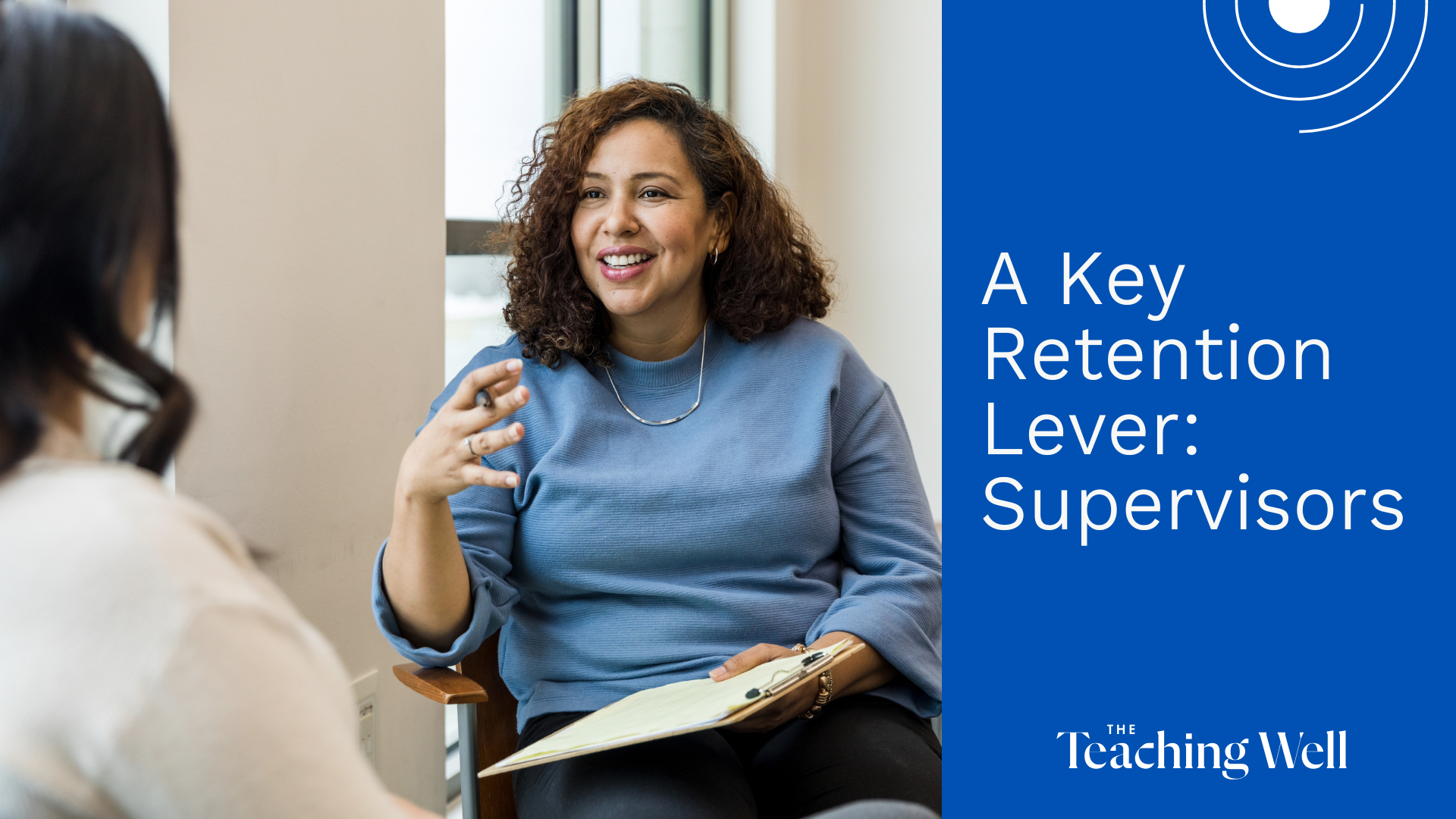
Pew Research findings from their 2023 report on supervision indicate that a majority of American workers say their “manager or supervisor is excellent or very good to work for” (Minkin 2023). We were so glad to read that people reported their bosses were “capable,” “confident,” and “fair.” This is great news!
Until you look at the statistic again. If 55% percent of workers rated their bosses as “excellent/very good,” that means there’s a whopping 45% who rated only “good, fair, or poor.” Luckily, the smallest piece of the pie is 20% who said their bosses or supervisors were fair/poor.
At TTW, we believe everyone should have access to a healthy workplace and we know that supervisors play an incredible part in making this possible. Lupe Lemus just finished her first year as a supervisor at TTW and she put it best when she said, “Supervision is an opportunity to build the community that you wish for! You get to create the systems. Supervisors are the stewards of the org.”
In fact, we believe that having a positive experience with a supervisor, literally determines if you want to stay or go. It is a key retention lever for employees.
Not only do strong supervisors cultivate retention at their organization, but becoming a supervisor is a career developer and skill builder. According to the same Pew study, only 44% of respondents felt their boss or supervisor was skilled at helping them grow in their role. As Lupe will attest, being a supervisor pushed her to really level up. She said, “I accepted that I really needed to be so intentional about how I was caring for myself because it has a direct impact on my supervisees. If we are saying that we have to put ourselves first, that has to be true for me too. I felt under a spotlight, with eyes on me now. Showing up sick to a supervision meeting is not showing up the way I say we should. Everything I was doing I was also modeling. It felt like a lot of pressure but also a great opportunity to ‘walk the talk.’” After stepping into a supervisory role, she was able to really see that TTW is “my organization too.”
Running the day-to-day operations of a school or non-profit is already all-consuming, so supervision may be something that you push off to your later list, or worse, never really get to until it’s required by law. Even then, you may not be able to give it as much time as it is worth. We ask you to rethink this–your people are your priority. It’s easy to say this when you think of students as your people, but focusing on the growth and development of those who interact with students is key.

Lupe sums it up, “It’s an honor to see how people grow and reflect. I love helping folks see how much agency they have and stepping into it.”
We also know that stepping into the role of a supervisor requires ongoing support and structures that bolster the relationships rather than hinder them. A couple of key practices we utilize to ensure a strong supervision model are:
TTW supervisors meet quarterly in a “Supervision Sync.” This is an opportunity for them to align on expectations, check in and celebrate growth and employee wins, and bring problems of practice to their supervision peers. While every supervisor may have their own style, supervisors across the organization are aligned.
Our bi-annual Performance Review cycle includes a two-way process for feedback where supervisees also offer praise and constructive feedback for their supervisors. Supervisors deserve to be learning and growing their craft too!
A robust practice of peer-to-peer feedback is cultivated among non-evaluative teammates. If the supervisor is the only one holding “difficult conversations” or mirroring growth areas, an “us versus them” mentality is generally strengthened. We actively work to dismantle that paradigm by empowering teammates to communicate feedback directly to each other.
If you’d like support with building your org’s supervision model or refining the one you already have, you know where to find us!