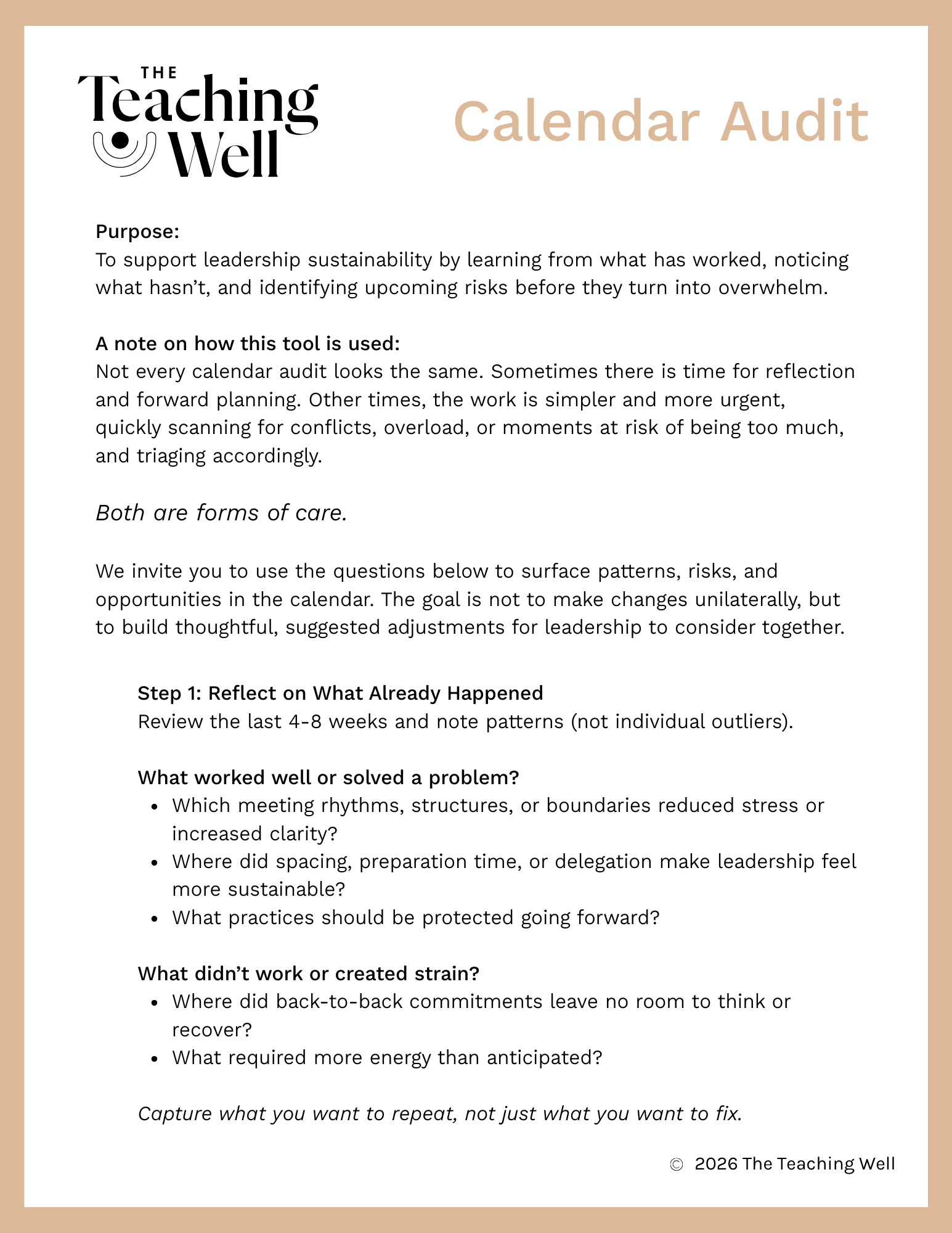
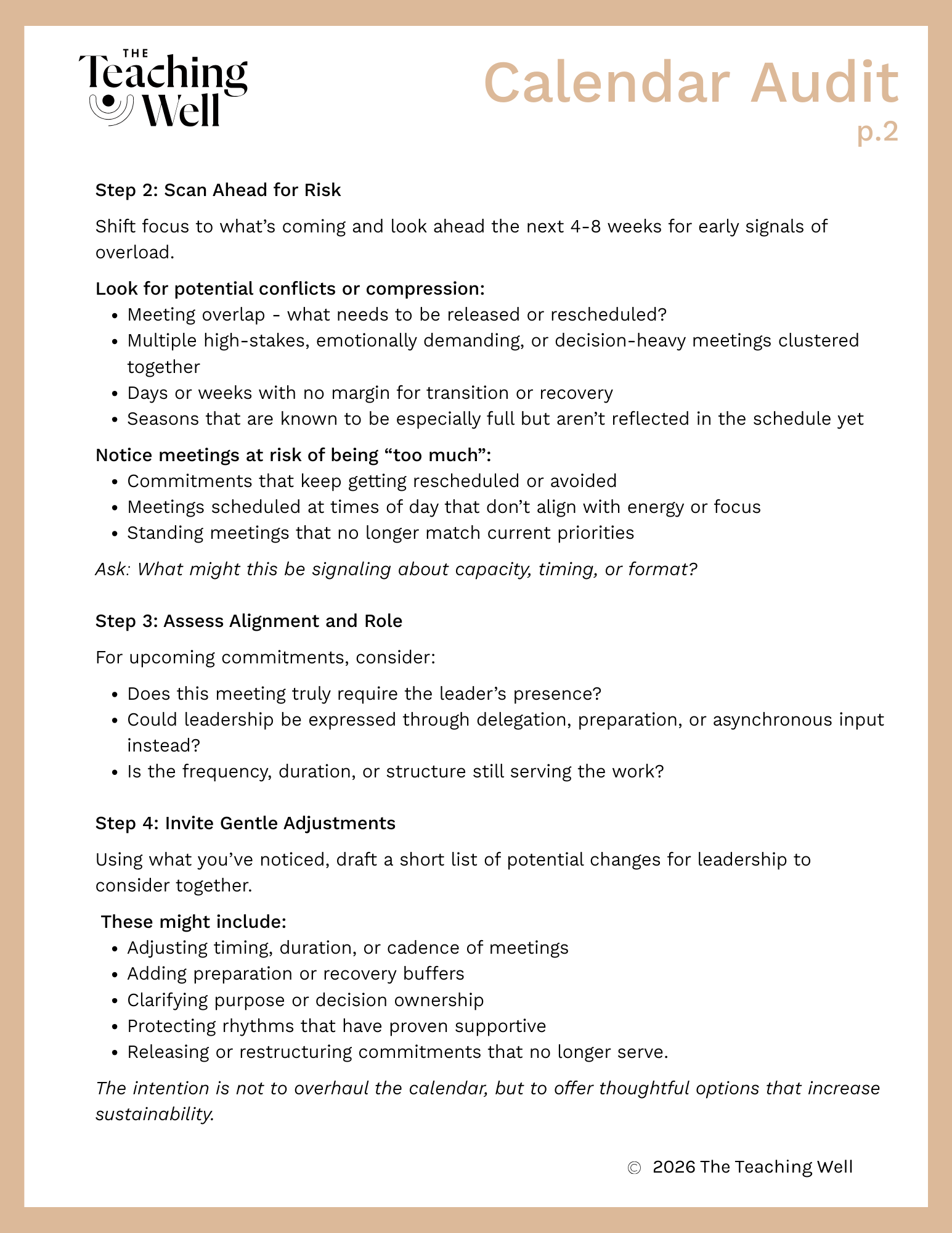
Leadership Systems Spring Cleaning: Calendar Audit
Leadership wellbeing often lives in the systems, rhythms, and routines that quietly shape how supported (or overwhelmed) leaders feel. Just as leadership is complex, so are the supports that bolster leadership. They aren’t likely to run efficiently in a “set it and forget it” mode. We had a chance to catch up with Emily K., The Teaching Well’s Executive Assistant, to get her reflections and the inside scoop on routine systems maintenance that keeps our Org leaders in step. She shared that a Systems Spring Cleaning can help sustain leadership wellbeing all year long because:
When leaders aren’t buried in logistical noise, they can lead with clarity and intention.
Clean systems reduce decision fatigue and protect cognitive energy.
Closing loops reduces mental clutter and anxiety.
Spring cleaning doesn’t have to be comprehensive. Even taking ten minutes to review a single system or recurring commitment can create meaningful space for focus and wellbeing.
In particular, Leadership Systems Spring Cleaning includes conducting a calendar audit.
This means looking at calendars through the lens of sustainability: meeting frequency, duration, preparation time, and recovery time. Once trends or patterns are noted, it’s possible to identify opportunities to reclaim time and reduce unnecessary meetings. Leaders gain spaciousness to think strategically, connect with their teams, and focus on the work that truly requires their leadership.
Here’s what we mean:
During a recent calendar audit, we found that our Executive Director was clear about next steps for grant applications after meeting with funders, but because there wasn’t time blocked off to execute those next steps, she was sacrificing lunch and after hours to complete deliverables. By blocking off additional time after funder meetings to stamp next steps, capture thinking, and share ideas with a thought partner, she was able to close the loop with funders much more efficiently and sustainably.
If you’d like more guidance on how to conduct your own calendar audit to increase your efficacy, we’ve broken it down into 4 steps.