
Nature Potato: Reclaiming Rest as a Practice, Not a Reward
By: Salina Mae Espinosa-Setchko
Spring in schools carries a particular kind of energy. There’s momentum—testing, transitions, field trips, end-of-year planning—layered on top of a kind of tiredness that’s been building for months. For many educators, this season holds both renewal and depletion at the same time.
At The Teaching Well, we often come back to a simple question:
What actually helps us sustain ourselves when the pace doesn’t slow down?
One of our teammates offers a practice with a memorable (and slightly ridiculous) name: Nature Potato.
Stay with us.
How This Practice Came to Be
This practice didn’t start as a formal strategy—it came out of real life.
In a season with limited resources and a need for something grounding, time in nature became a go-to. At first, that looked like hiking. And while hiking was beautiful, it didn’t always bring the kind of rest the body was actually craving. There was still movement, still stimulation, still a sense of doing.
Over time, something shifted.
Instead of moving through nature, the question became:What happens if I just stay?
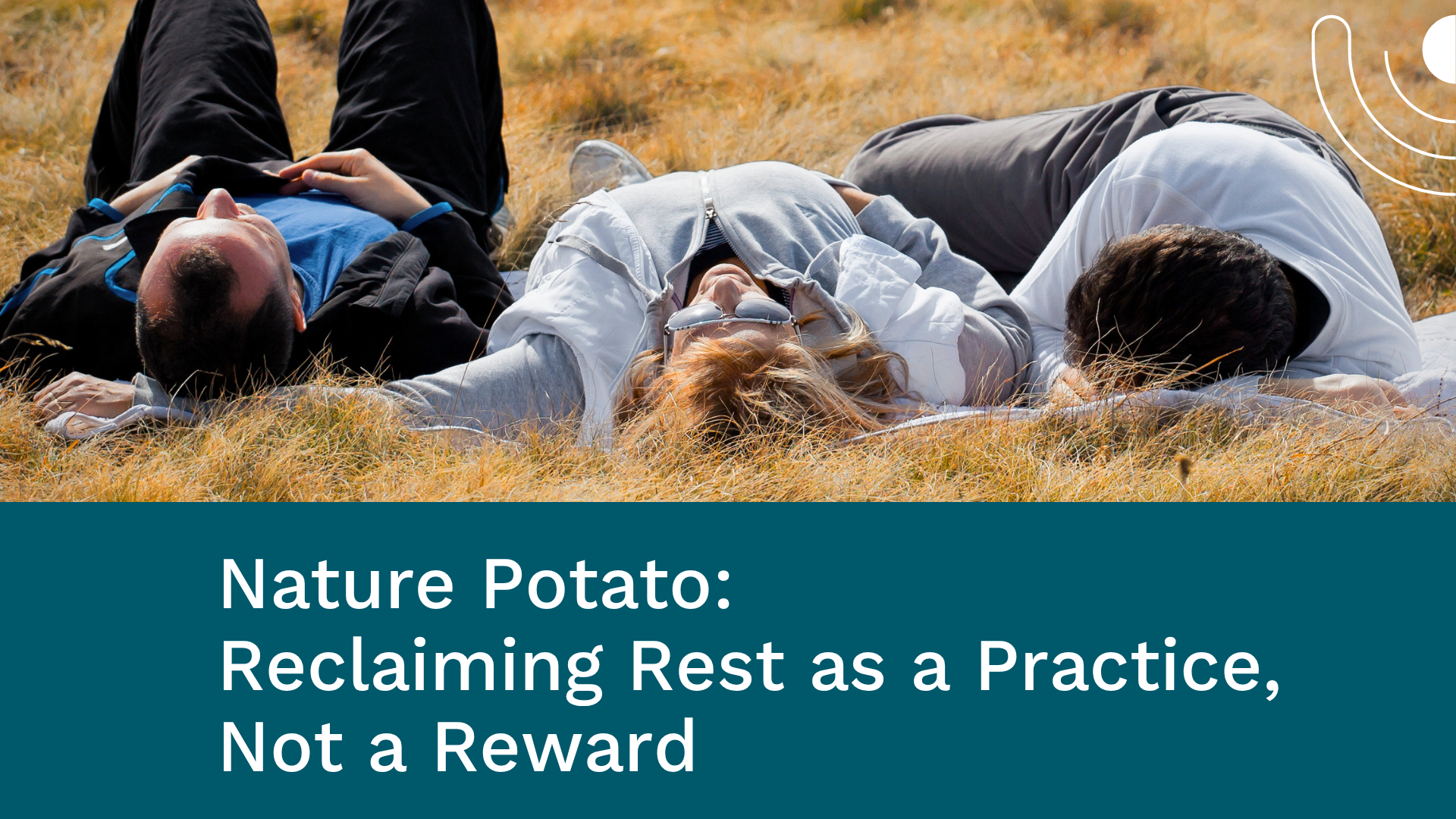
So the practice evolved—finding a quiet, slightly tucked-away spot, laying down a blanket (sometimes even bringing pillows), and letting the body soften. Not chasing a view. Not tracking miles. Just… being.
That’s Nature Potato.
Why It Works
There’s a growing body of research that shows time in nature can support stress reduction and nervous system regulation.
But honestly, most of us don’t need research to tell us this.
We feel it.
The way our shoulders drop after sitting outside for a while. The way our breath deepens when no one is asking anything of us. The way time slows down just enough for our body to catch up.
Nature Potato simply gives that experience more space.
What Is “Nature Potato”?
Nature Potato is the practice of being intentionally still and comfortable in nature with no agenda beyond rest and noticing.
It might look like:
Walking just enough to find a quiet or less crowded spot
Bringing a blanket, hammock, or something soft to lie on
Settling in for a while—long enough for the body to shift gears
Letting yourself stay, without needing to be productive
Rather than moving through nature, you’re letting nature hold you.
How to Try It
If you’re curious, here are a few ways to make this practice your own:
1. Make it cozy (this is not a minimalist situation)
Bring what you need to actually want to stay:
Blankets, layers, even a pillow
Snacks (very important)
Tea in a thermos if you’re feeling extra
A journal or a book
Comfort is not cheating—it’s the point.
2. Let yourself “do a little”
This doesn’t have to be a strict do-nothing practice.
You might:
Lie back and watch the clouds
Read a few pages
Journal for a bit
Then just listen
It’s less about doing nothing perfectly and more about letting yourself move at a slower, softer pace.
3. Support your senses
Silence isn’t the only way in.
Some people love quiet. Others don’t.
You might bring headphones and play soft, calming music—something ambient or spa-like—to help your body settle, especially if you’re in a busier park. It can create a sense of ease and privacy that helps you drop in.
4. Stay a little longer than feels natural
There’s often a moment where you feel a little restless. If it feels okay, stay.
There’s something on the other side of that moment—where your body starts to settle more deeply.
A Different Kind of Rest
In a culture that often asks us to earn rest—or turn it into something productive—Nature Potato offers a quieter alternative.
You don’t have to optimize this.Y ou don’t have to get it right.
You just have to show up, get comfortable, and stay.
As this season continues to ask a lot of educators, this is one small way to return to something steady.
Not by doing more—but by allowing yourself, even briefly, to do less.
If you’d like to experience some specific mindfulness practices connected to nature, you can watch this workshop that Salina Mae did for Environmental and Climate Change Literacy Project.